Thai Dance
Thai Dance
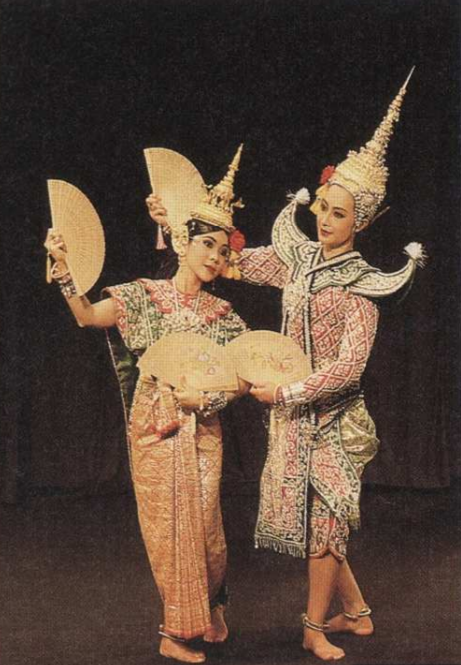
Thai Dance is characterized by slow, gracious, almost hypnotizing hand movements. Historically Thai dance is strongly connected to stage acting and therefore contains a lot of expression. Most poses have a clear meaning like being in love, shyness, sorrow, anger or honour to Buddha or the King.
Thai dance is based on slow rhythms, although some folk dances are quite fast. The slow rhythm requires a good balance and body control.
Men and women dance in groups, single or with each other. The emphasis is not the flirt between man and woman, which is the case in many Latin American dances. Thai dance aims to create a wonderful picture for the audience.
The graceful poses and movements are a joy to watch. It is no coincidence that Asian dances are popular now with choreographers. In dance music videos we see more and more Asian influences. The feminine and elegant movements form a reaction to the masculine street and hip hop dance we have seen the last 15 years.
Thai dance is not only nice to look at, but also great to practice yourself — it contributes to a strong mental and physical balance.
History
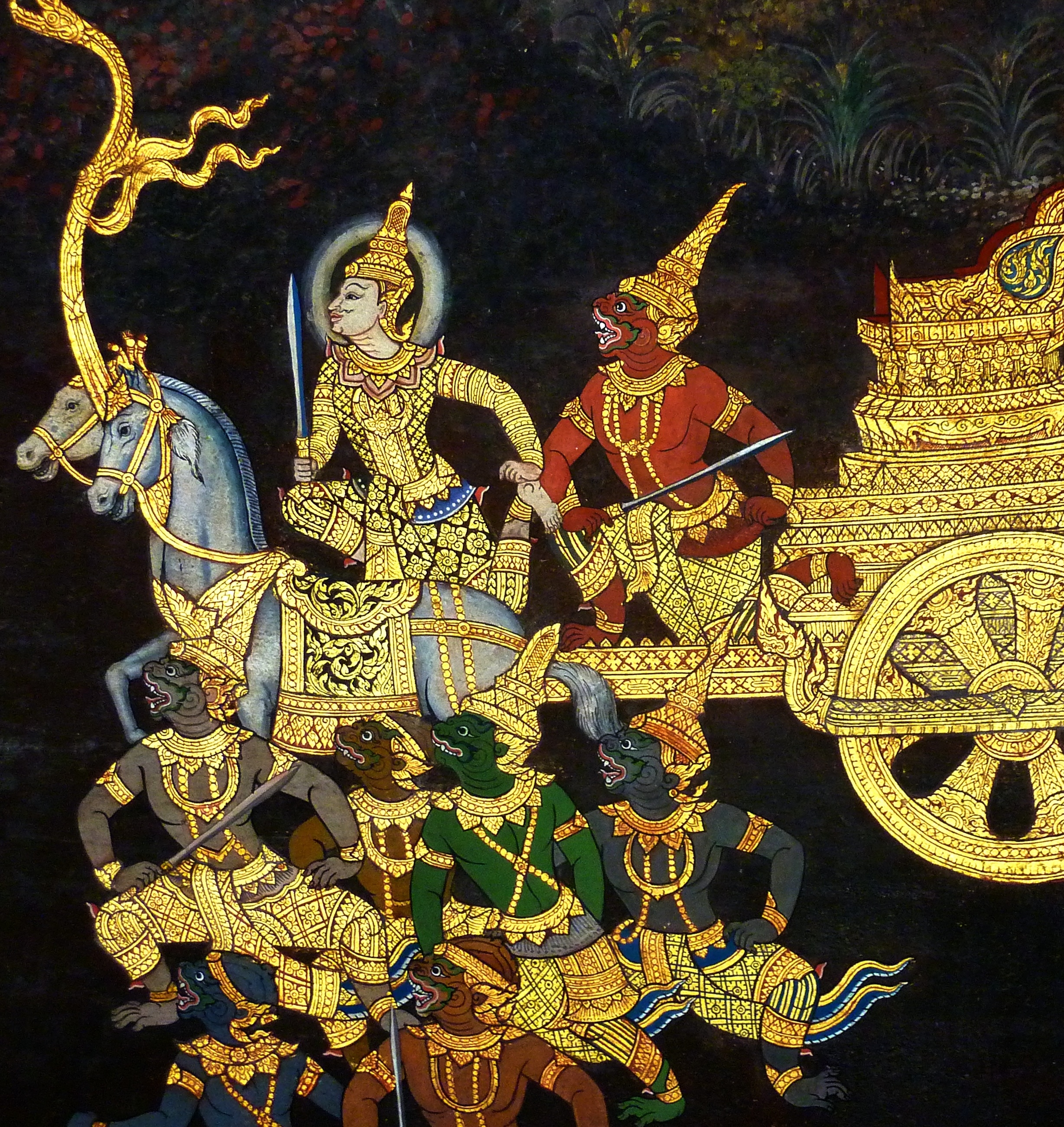
The history of Thai dance goes back very far and is rooted in Buddhism, which spread from India to Thailand about 1000 years ago. Over time, Thai dance was further developed in royal Thai circles. It was used as a tribute or entertainment for the king, with dance playing a large role in theatrical performances. Usually the famous epic "Ramakien" was portrayed. This is the most well-known mythical tale from Thailand — quite a long story, as a full Ramakien performance could last up to 5 days.
The main characters are the well-known villain "Yak", a kind of monster depicted in many Thai temples, and the well-meaning monkey "Hanuman", who stood up for the royal family. It is a story about love and the battle between good and evil. Ramakien performances are still popular in Thailand.
The magnificent handmade costumes make a particularly strong impression. Classical Thai dance is not considered easy, especially because the costumes are quite heavy.
Alongside classical Thai dance, there is a rich tradition of folk dance. Many of the movements and techniques from folk dance are derived from classical dance. Different regions have their own dances, based on everyday Thai life, such as planting rice, harvesting or Buddhist rituals. In the North (Chiang Mai) the dances are extremely graceful and stylish; in the South and East (Isaan) somewhat more active and festive, but still elegant and refined.
Music
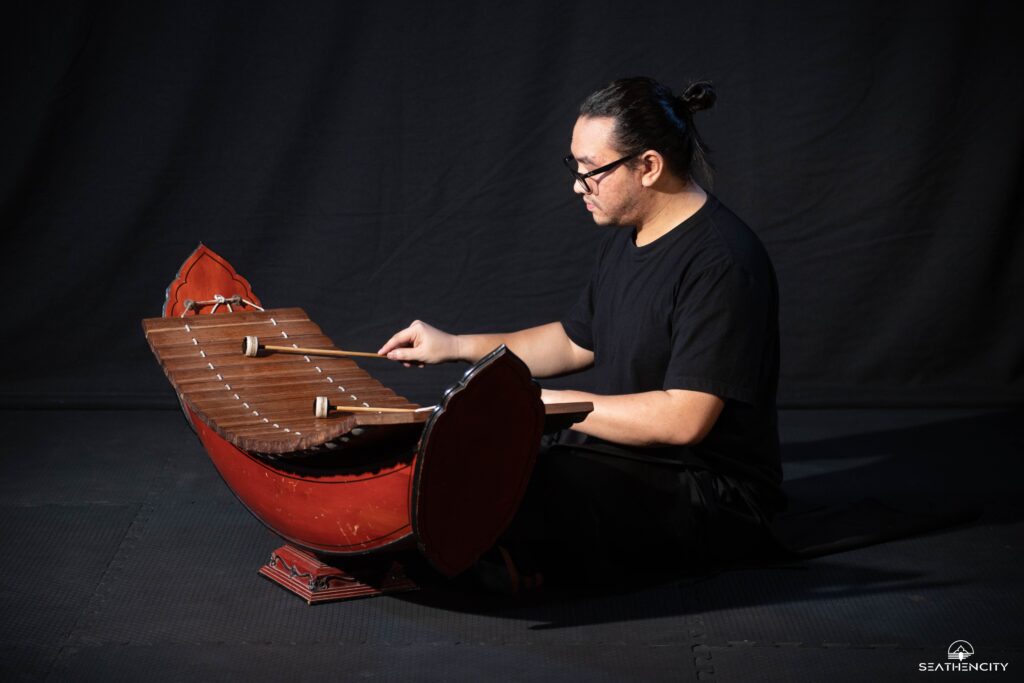
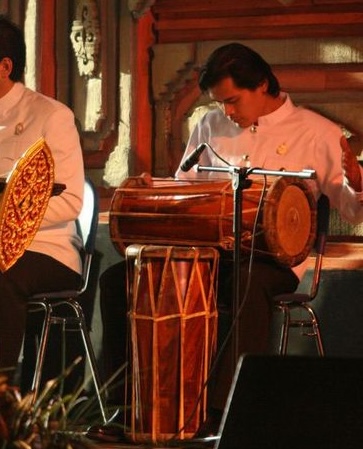
In traditional dance performances, the dancer-actors were accompanied by an orchestra that was not visible to the audience. Instruments are generally made of bamboo, such as the Kaen (mouth organ), Ranaad (xylophone), Pie (flute), Saw (a kind of cello). For percussion: the Tsjing (cymbals) and the Khlong (drum). The music is based on the pentatonic scale, also known from Chinese music. Traditional music may sound chaotic to the untrained ear, as the melodies do not resemble Western ones and take some getting used to.
Most compositions stay in one key. They often start slowly and gradually increase in tempo. The monotony, combined with the typical bamboo sounds, can have a trance-like effect.
Modern Thai folk music sounds very cheerful, somewhat faster and usually with vocals. Western music is now very popular among young people in Thailand. Western-oriented Thai rock songs dominate the charts, though Thai folk music remains popular with all ages.